
Weekly Brief
Be first to read the latest tech news, Industry Leader's Insights, and CIO interviews of medium and large enterprises exclusively from The Manufacturing Outlook
The Manufacturing Outlook: Specials Magazine

NDT
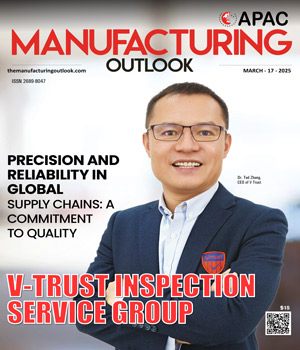
V-Trust Inspection Service Group
Precision and Reliability in Global Supply Chains: A Commitment to Quality
In recent years, global supply chains have undergone profound transformations. Driven by shifting manufacturing hubs, economic disruptions, and evolving consumer expectations, businesses are navigating an increasingly complex landscape. The traditional model of centralized production has given way to more dispersed manufacturing locations, creating new challenges in ensuring product consistency and quality. As buyers source from diverse suppliers worldwide, maintaining consistent quality has become a critical concern. This complexity is compounded by the industry’s reliance on part-time or freelance inspectors, a common practice that often results in inconsistent outcomes and limited accountability. Businesses now require reliable solutions to meet international quality standards and protect their brand reputation. V-Trust Inspection Service Group has emerged as a trusted partner in overcoming these hurdles. With nearly two decades of experience, the company has earned a reputation for providing high-quality, reliable solutions for businesses navigating the complexities of global supply chains. Its commitment to excellence, consistency, and client satisfaction has made V-Trust an invaluable ally in maintaining product quality and supplier reliability. Headquartered in Guangdong Province, V-Trust began as an internal quality control division for Guo Knight Industry Group. Over time, it expanded its services beyond the company’s internal needs to serve external clients, becoming Asia’s largest inspection service provider. Unlike many competitors who rely on part-time or freelance inspectors, V-Trust distinguishes itself by employing a dedicated team of over 600 full-time professionals. “In our industry, the general way is to use freelancers or part-time inspectors, but we only use full-time inspectors. This ensures better control, consistency, and accountability, making us stand out as a reliable partner for quality assurance in global supply chains,” says Dr. Ted Zhang, CEO of V-Trust Inspection Service Group. With a robust operational network, the company is well-positioned to meet the diverse needs of clients worldwide.
NDT
ASM Pacific Technology Ltd. [ASMPT] [HKG: 0522]
Leading Innovation in Semiconductor and Electronics Manufacturing
Robin Gerard Ng Cher Tat, CEO
ASM Pacific Technology Ltd. (ASMPT) is a global leader in semiconductor assembly, packaging equipment, materials, and surface mount technology (SMT) solutions. Headquartered in Singapore and listed on the Hong Kong Stock Exchange, the company has played a pivotal role in advancing the semiconductor and electronics assembly industries since its establishment in 1975. One of ASMPT’s key strengths is its comprehensive product portfolio, which spans multiple aspects of semiconductor and electronics manufacturing. The company provides cutting-edge semiconductor solutions, including bonding, molding, and trim & form equipment, which are crucial in microelectronics, semiconductor, photonics, and optoelectronics industries. Its SMT solutions feature high-precision DEK printers and SIPLACE SMT placement systems that cater to the demands of the electronics assembly and semiconductor markets. Furthermore, ASMPT’s materials division offers a wide range of leadframes and advanced packaging materials that ensure highperformance interconnections within semiconductor devices. Innovation has been at the heart of ASMPT’s growth strategy. The company invests up to 10% of its annual equipment revenue into research and development (R&D) to drive technological advancements. This commitment has resulted in the development of groundbreaking solutions such as the Active Alignment Solution, which significantly enhances the optical performance of CMOS camera modules (CCM) used in smartphones. This technology, which was honored with the Technological Achievement Grand Award at the Hong Kong Awards for Industries, has set the industry standard, with over 80% of high-end mobile phone CCMs globally utilizing ASMPT’s IS600GS active alignment platform. This achievement underscores the company’s ability to develop and commercialize innovative technologies that meet the evolving needs of the semiconductor industry.

NDT

Oji Holdings Corporation, founded in 1873, has grown into a global leader in the paper and packaging industry. With operations in over 80 countries, the company has established itself as an innovator in multiple sectors, including paper manufacturing, packaging solutions, forest resource management, and advanced materials development. Its ability to integrate sustainability with cutting-edge technology has allowed it to remain at the forefront of the industry while addressing environmental concerns. The company’s business is built on four primary segments. The Household and Industrial Materials Business focuses on producing essential everyday products such as cardboard boxes, corrugated paper, packaging paper, paper towels, toilet paper, and disposable diapers. These items cater to both domestic and industrial needs, maintaining a high standard of quality and reliability. The Functional Materials Business specializes in manufacturing advanced papers, thermal papers, stickers, films, and tapes. Oji Holdings has made significant strides in developing highfunction, eco-friendly products, including non-fluorine oil-resistant paper and biodegradable non-woven fabrics like “HyBioth.” These products reflect the company’s commitment to environmental responsibility while meeting the evolving demands of consumers and businesses. Another crucial part of Oji Holdings’ operations is its Forest Resources and Environment Marketing Business. Managing approximately 190,000 hectares of forest in Japan and 280,000 hectares overseas, the company ensures a steady supply of raw materials while contributing to environmental conservation efforts. Sustainable forestry practices enable Oji Holdings to maximize CO₂ absorption, preserve biodiversity, and maintain a responsible balance between production and nature. The Printing and Communications Media Business, the fourth key segment, specializes in producing and selling paper for books, magazines, newspapers, and other print media. By leveraging advanced printing technologies, the company provides highquality solutions tailored to the needs of its clients.
3D Printing

Advanced Product Inspection in Renewable Energy
Ben Hart, Director of Process Design, Pattern Energy Group
CNC Machining

Digitalization is the Key to Sustainable Manufacturing
Dr. Demet Karaali, Director / Head of IT - Product Development & Production, Daimler Trucks Asia
Injection Molding

A Harmonized Pathway to the Future: A Sustainability-Driven 3x3 Framework
Athikom Kanchanavibhu, Executive Vice President - Digital & Technology Transformation, Mitr Phol Group
Injection Molding

Halal Biopharma: Closing The Therapeutic Gaps
Dr Israfil Merican MD, MHM, Assistant Vice President - Head of Biopharma and Patient Access, Pharmaniaga Berhad
Injection Molding

Clinical Trials Landscape in APAC and Its Unique Characteristics and Opportunitie
Marcia Matos, Clinical Operations HUB Director for APAC, SERVIER

IN MY OPINION
CNC Machining
Emphasizing The Importance Of Assuring Product Quality
Raymond R. Tjandrawinata, Director of Business Development and Scientific Affairs, Dexa Medica

LAST WORD
Contract Manufacturing
Safety Matters: A Blueprint for Success
Jaewon Oh, Environment, Health and Safety Manager, Kellogg Company
IN FOCUS

The Vital Function of Small Fasteners in Ensuring Product Integrity
Manufacturers are not the best candidates for traditional fastening techniques like welding and adhesives because of their high costs and low productivity.
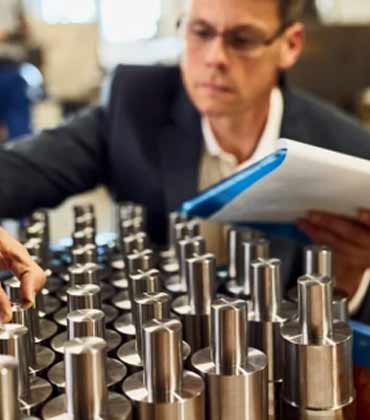
The Critical Role of Product Inspection in APAC
The Asia-Pacific (APAC) region has emerged as a dominant force in global manufacturing and trade,
EDITORIAL
The Evolving Landscape of Product Inspection in APAC
The Asia-Pacific (APAC) region, home to some of the world’s largest manufacturing and export economies, has become a critical hub for global supply chains. With nations like China, India, Vietnam, and Indonesia playing pivotal roles in manufacturing, the demand for robust product inspection and quality assurance mechanisms has never been greater. As global standards tighten and consumer expectations rise, companies operating in APAC must rethink their approach to product inspection to maintain competitive advantage and regulatory compliance.
The expansion of global trade has increased scrutiny on the quality and safety of products manufactured in APAC. Regulatory bodies in Europe, North America, and within APAC itself have established stringent guidelines to prevent defective, hazardous, or non-compliant products from reaching consumers. From electronics and automotive components to food and pharmaceuticals, industries face mounting pressure to ensure their products meet these evolving standards.
For companies, product inspection is no longer just about meeting minimum requirements—it is a fundamental part of maintaining brand reputation and securing customer trust. Product recalls, safety hazards, and substandard quality can lead to costly legal battles, loss of market share, and severe reputational damage.
Despite its importance, product inspection in APAC is fraught with challenges. Diverse regulatory frameworks exist across APAC, making compliance complex for multinational companies. Harmonizing product standards remains a key challenge. Cost pressures also play a role, as many manufacturers, especially small and medium-sized enterprises (SMEs), operate under tight profit margins, often leading to inadequate investment in quality control measures.
The proliferation of counterfeit goods in APAC has created quality concerns for brands and consumers alike, necessitating stricter enforcement of inspection protocols. Additionally, technological gaps exist where leading manufacturers leverage advanced inspection technologies such as AI-driven defect detection and IoT-enabled monitoring, but many factories still rely on outdated, manual inspection processes.
As APAC continues to solidify its position as a global manufacturing powerhouse, ensuring robust product inspection protocols will be critical for sustaining growth, fostering innovation, and maintaining consumer confidence. Companies that prioritize quality assurance and adapt to evolving technological and regulatory landscapes will not only mitigate risks but also unlock new opportunities in an increasingly competitive market.
