
Weekly Brief
Be first to read the latest tech news, Industry Leader's Insights, and CIO interviews of medium and large enterprises exclusively from The Manufacturing Outlook
The Manufacturing Outlook: Specials Magazine
Producing gears for industrial applications in one-off and very small-batch environments creates operating conditions that differ significantly from standard serial manufacturing. Unlike automated high-volume manufacturing, each component may require a completely different machining setup, tooling configuration, clamping arrangement and coolant condition. Engranajes Juaristi specializes in manufacturing gears to customer specifications in highly variable one-off and small-batch production environments. It combines advanced grinding technology, controlled manufacturing conditions and operator-driven flexibility to achieve precision levels expected from serial production environments. “Our core business is the manufacturing of complete gears, but the real added value lies in the precision we can achieve,” says Jokin Juaristi, general manager. With nearly half of its production consisting of single-part orders, Engranajes Juaristi is able to consistently maintain tolerances as tight as three microns, with finishing corrections possible down to a single micron. This level of precision is critical for applications in wind energy, railway systems, industrial gearboxes and machine tools, where gear meshing accuracy, operating noise, durability and long-term reliability directly affect system performance under load.
Industrial Equipment
The performance of an insulating glass unit depends heavily on the quality of its sealants, determining how well the window resists moisture, retains gas, and delivers long-term durability. For manufacturers, the reliability of these sealants directly influences production efficiency, product performance and customer satisfaction. This is the environment in which IGK has built its reputation by combining dependable chemistry with hands-on technical support to help customers keep their operations running smoothly. Founded in Germany and known for developing the first non-mercury polyurethane sealant in 1988, IGK has spent nearly four decades advancing the materials used in insulating glass production. But what truly differentiates the company is not just its formulation expertise, it’s the emphasis on service, troubleshooting, and partnership. “We do not believe in selling a product and walking away. We want to build a relationship and support each customer’s business,” says James Rodo, CEO. This philosophy shapes how IGK responds to challenges, develops new solutions, and supports manufacturers in their day-to-day operations. IGK’s product range reflects both its history and continuous development efforts. The company produces polyurethane systems that have long formed the backbone of its portfolio, alongside reliable polysulfide materials for secondary sealing. Its polyisobutylene product provides a critical primary barrier for moisture and gas protection. As automated production has evolved, IGK has introduced thermoplastic spacer technology and is preparing to launch a new reactive TPS system. It also formulates a fire-resistant sealant for specialized applications and supplies cleaning solutions that help maintain equipment accuracy and cleanliness. Together, these materials allow IGK to support insulating glass production from preparation through long-term performance..
Industrial Digital Twin Platform of the Year in Europe 2026

Framence is transforming how industrial teams access and manage critical information, cutting through the complexity of scattered data with its photorealistic digital twins. Acting like a ‘Google Street View’ for industrial environments, its solution provides a seamless, instantly accessible view of assets—eliminating the inefficiencies of navigating multiple systems. In fast-paced industrial settings, having real-time access to accurate data is not just a convenience—it is essential for efficiency and informed decision-making. Across industries, engineers and technical specialists spend up to 30 percent of their working hours searching for crucial data buried in ERP platforms, IoT networks, asset management tools, and cloud databases. The constant back-and-forth between interfaces makes retrieving insights time-consuming and inefficient. Framence streamlines this process by serving as a unified, user-friendly access point that integrates effortlessly with existing systems. Without altering third-party platforms, it ensures that teams can quickly locate and leverage the information they need, no matter where it is stored. Since its launch in 2019, the company has prioritized making digital twins fast, easy, and cost-effective to create and update—giving teams a smarter, more efficient way to navigate spaces, collaborate, and manage assets. “Whether managing a vast real estate portfolio or overseeing complex technical assets on a factory floor, Framence equips teams with everything they need at their fingertips—helping them spend less time searching and more time driving results,” says Adrian Merkel, Managing Director of Framence. Photorealistic Twins for Seamless Data Integration The company’s technology captures a photorealistic representation of facilities and embeds essential data points within the imagery. For example, engineers inspecting a pump in a facility no longer need to search through multiple software systems for maintenance records, IoT readings, or specifications. Instead, they can click on the pump within the digital twin, instantly accessing all relevant data from sources like SAP or IoT Cloud in one centralized, visually intuitive interface. This streamlined approach dramatically accelerates workflows and enhances decision-making. Beyond centralizing data access, Framence also addresses a key limitation of traditional digital twins—keeping them up to date. Conventional methods, such as laser scanning, require specialized equipment and professional expertise, making updates costly and infrequent. Over time, these digital twins become obsolete, making them less dependable for real-world applications. Framence takes a different approach, allowing users to update models using widely available cameras, including smartphones. This enables on-site staff to effortlessly capture new data without waiting for external specialists, ensuring the digital twin always reflects the current state of assets and facilities.
Smart Manufacturing

No shortcuts to the future: PMI's Manufacturing of The Future Roadmap
Alessio Preti, Director Industrial Strategy and Capex, Philip Morris International [NYSE: PM]
Plastic Tech

Reinventing Plastics Manufacturing
Inari Seppa, Director – Sustainability & Industrial Policies EMEA, Eastman
3D Printing

Our B Corp Journey At Brompton Bicycle
Matthew Plata, Advanced Manufacturing Engineering Manager, Brompton Bicycle
Contract Manufacturing

Ensuring Sustainability while Achieving Profitability
Marco Guazzoni, Sustainability Director, Vibram Group
Composite Materials
Digital Transformation: Engaging our People
Dr. Udo Schneider, Senior Vice President Active Ingredient Manufacturing, Bayer

IN MY OPINION
Industrial Supplier and Distributor
Securing Industrial Decarbonisation
Marcos Matijasevich, Head of Low Carbon Transition, Essar Oil (UK) Limited
LAST WORD
Industrial Fasteners
Leadership in a Changing Environment
Martin Rößing, Plant Manager, BorgWarner
IN FOCUS

Embracing Sustainability: Cardboard Packaging's Role in Europe's Manufacturing Future
High-quality cardboard packaging enhances manufacturing efficiency, product protection, sustainability, supply chain performance, and brand value across European industries.
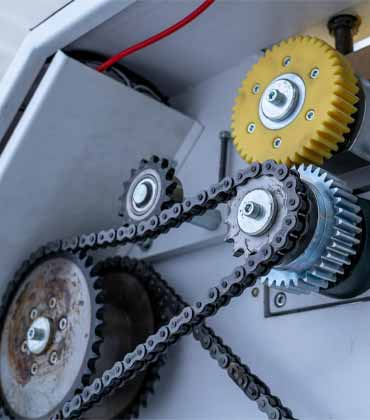
Europe's Manufacturing Excellence: Precision Machining of Industrial Transmission Elements
Industrial transmission elements machining in Europe delivers precision components that enhance power transmission, equipment reliability, efficiency, and performance.
EDITORIAL
Engineering Reliability for a Changing Industry
Manufacturing across Europe is being shaped by a simple reality. Companies need to do more with greater precision while navigating shifting market demands, supply chain pressures and increasingly complex operations. In this edition of Manufacturing Outlook Europe, we explore how manufacturers are responding through practical innovation, technical expertise and a relentless focus on performance.
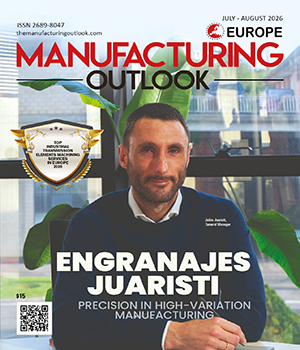
Our cover story features Engranajes Juaristi, recognised as the Top Industrial Transmission Elements Machining Services in Europe 2026. Over the years, the company has earned the trust of customers through its expertise in precision machining and the production of gears, transmission components and specialised industrial parts. Its focus on quality, accuracy and customer requirements has helped it support critical industrial applications across a range of sectors. By pairing engineering know-how with continued investment in its manufacturing capabilities, Engranajes Juaristi continues to strengthen the performance and reliability of industrial transmission systems.
This edition also features perspectives from leaders addressing key issues facing industry today. Marcos Matijasevich, Head of Low Carbon Transition at Essar Oil (UK) Limited, shares his views on the realities of industrial decarbonisation and the importance of practical, scalable solutions supported by the right infrastructure and partnerships. Döndü Ünal Haktar, Vice President Quality & Production Excellence at HUGO BOSS Textile Industries, discusses the value of strong project leadership, organisational alignment and structured transformation in helping businesses deliver lasting results.
Together, these stories highlight what continues to move manufacturing forward: technical excellence, strong leadership and a willingness to adapt. We invite you to explore this edition and learn how organisations across Europe are building more resilient, efficient and future-ready operations.
