
Weekly Brief
Be first to read the latest tech news, Industry Leader's Insights, and CIO interviews of medium and large enterprises exclusively from The Manufacturing Outlook
The Manufacturing Outlook: Specials Magazine
![TODA KOGYO [TYO:4100]: Particle Precision Behind Industrial Catalysis](https://www.themanufacturingoutlookapac.com/uploaded_images/Untitled-4-kpqex.jpg "TODA KOGYO [TYO:4100]: Particle Precision Behind Industrial Catalysis")
At the catalyst scale, composition is only part of the story. Particle size, shape, distribution and surface structure can alter how a material disperses and reacts. Catalytic performance is partly determined before the material reaches the industrial process it is meant to influence. TODA KOGYO [TYO:4100] has spent more than two centuries working with iron oxide, beginning with bengala pigment production in 1823. That materials heritage evolved significantly with the development of wet-synthesis technology, giving the company much finer control over the characteristics of iron-oxide particles. Today, that capability underpins its industrial catalyst work, from activated iron oxide for combustion to high-activity iron catalysts being developed for new hydrogen-production pathways. The connection between these applications lies at the particle level. TODA does not approach catalyst development simply as a choice of chemical composition. Instead, it engineers the physical characteristics that determine how the material behaves once it enters the reaction.
![Toda Kogyo [TYO:4100]: Particle Precision Behind Industrial Catalysis](https://www.themanufacturingoutlookapac.com/newstransfer/upload/48-bf3xu-.jpg "Toda Kogyo [TYO:4100]: Particle Precision Behind Industrial Catalysis")
Industrial Coating
DAWN Tech
Regional Parylene Expertise for High-Reliability Manufacturing
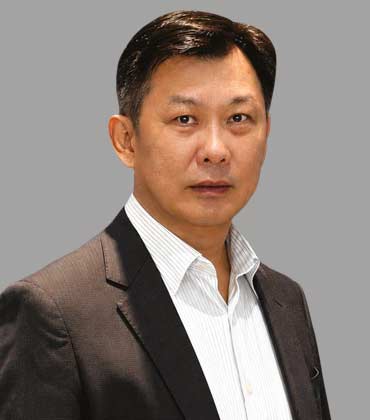
Koon Lee Shen, Founder and CTO
A precision component often demands protection that appears straightforward from the outside. It must resist moisture, chemicals, corrosion and electrical stress without adding meaningful bulk, altering dimensions or leaving any surface inadequately covered. The challenge intensifies as components grow smaller and more intricate—narrower gaps, sharper edges, denser circuitry and complex geometries that reduce the margin for coating inconsistency. A protective layer may appear complete while thinning at an edge, pooling between components or failing to enter the spaces most exposed to damage. That is the problem Koon Lee Shen built DAWN Tech to solve. When he founded the company in Malaysia in 1994, Parylene conformal coating was already established in Europe and North America as a high-reliability form of surface protection for electronics, aerospace, medical devices and automotive systems. .
CNC Machining
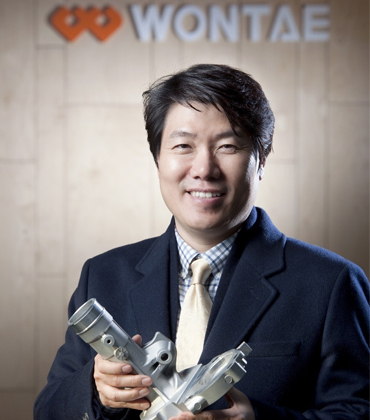
How does WONTAE integrate mold design and casting parameters into a single system? WONTAE operates through a closed-loop engineering model that integrates mold design, die casting, post-processing and quality data within a single engineering system. Rather than functioning as separate stages, mold structure, gate and runner layout, cooling circuits, vacuum configuration and injection parameters are engineered together from the outset. Before production begins, CAE-based flow and solidification analysis validate both mold design and casting conditions. By engineering and verifying these elements together, WONTAE consistently achieves OEM tolerances at the ±0.05 to 0.1 mm level and shortens the mass production stabilization phase after SOP. “WONTAE approaches die casting not as a 'casting technology' but as system engineering,” says H.S. Yoon, VP-Head of Sales and Purchasing. Structured Control across Production How are process control and quality planning embedded early in die casting production? What differentiates WONTAE is how early it builds control into the process. During mold development, the team uses flow and solidification analysis to determine gate location, filling speed and injection rates before a single part is cast. This reduces porosity by 30 to 50 percent and consistently delivers process capability levels of Cpk 1.67 or higher. Once production begins, automated die-casting equipment continuously monitors injection speed, mold temperature and vacuum pressure in real time, minimizing lot-to-lot variations. The integration continues through Advanced Product Quality Planning (APQP) based alignment of Design Failure Mode and Effects Analysis (DFMEA), Process Failure Mode and Effects Analysis (PFMEA) and Control Plans from the mold design stage. Mold trials, casting conditions and inspection data are managed in a single database. When abnormalities surface in mass production, engineers can adjust mold structure and process parameters within the same control system. This reduces rework, limits disruptive post-SOP changes and prevents minor deviations from escalating into systemic failures.
Fastener
Okamura Corporation
A Century of Precision in the Small Components that Hold Industry Together
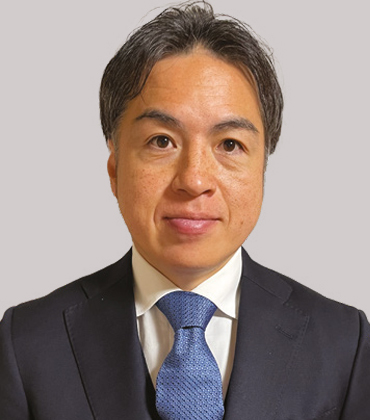
Tomoki Okamura, Representative Director, President and Chief Executive Officer
What philosophy guides Okamura Corporation’s approach to manufacturing essential industrial components? “What is essential is invisible to the eye.” Antoine de Saint-Exupéry wrote that line in The Little Prince, and it has resonated deeply in Japan ever since, becoming one of the most quoted lines in the language. It also reads as a precise manufacturing philosophy, one Okamura Corporation has built 110 years of production around. It produces nuts, the small fastening components that hold together automobiles, electrical assemblies, construction frameworks and rail-mounted connector systems. “We manufacture nuts and fastening components known as the salt of industry. Salt may not be conspicuous, but it is an essential ingredient. We are a small company, and we value doing things honestly and with integrity that only we can do,” says Tomoki Okamura, representative director, president and Chief Executive Officer. That philosophy drives every stage of production, from raw material consultation through final inspection and Manufacturing Outlook APAC names Okamura the Top Square Nuts Manufacturer in APAC 2026 as a direct reflection of that standard. A Manufacturing Method Worth Preserving How does Okamura maintain competitiveness using traditional press processing techniques in modern manufacturing? Press processing is an older technique, and the industry has largely moved on. Okamura has not. It designs and manufactures its own tooling in-house, giving it direct control over quality at the earliest stage of the production chain while passing cost advantages to clients. That pairing of process ownership and pricing efficiency is something few competitors can match, and it has kept it relevant across automotive, electrical, construction and connector markets where procurement teams balance spec compliance against unit cost. Annual output exceeds 200 million nuts, a volume that makes visual inspection not just impractical but statistically inadequate. Roughly 20 years ago, complaints from an automotive client about defective products reaching the assembly line prompted Okamura to invest in full-camera inspection systems. The decision changed it. Camera inspection machines now screen virtually all outgoing products, identifying dimensional anomalies and incomplete tapping before any unit leaves the facility. Camera inspection has reduced defect outflow to near zero. Downstream clients no longer face the production stoppages that sporadic defects routinely cause, and this has built credibility across its customer base.
Vietnam Manufacturing

Selective Conformal Coating in Electronics Manufacturing
Jon Urquhart, Director - Global Applications Engineering, PVA
Fire Door Testing

Redefining The Art Of Demand Forecasting Beyond Technology
Daniel Kebriti, Head of Manufacturing Operations ANZ, Lush Cosmetics
Industrial Training

The Shift to Autonomous Maintenance in Manufacturing
Fauzi Baharin, Manufacturing Manager, Mondelez International
Industrial Engineering

Reimagining the Future of Manufacturing
Davey L. Ortiz, Multiple Site Manufacturing and Facilities Leader, Cirkul
Manufacturing Consulting

Strategic Talent Management in Manufacturing: Building the Workforce for a Future-Ready Industry
Zenas Kok, Chief People Officer and Lai Wai Kee, Senior Manager, Talent, Mamee-Double Decker Group

IN MY OPINION
CNC Machining
Partnering for Performance: How Customer-Centric Chemistry is Reshaping Cleaning in Modern Manufacturing
Uwe Wanner, Director Research & Development, Laboratory Manager, MicroCare, LLC

LAST WORD
Electronics Manufacturing
From Opportunity to Strategic HR Leadership
Evangelina Paschal, HR Manager, Republic Manufacturing
IN FOCUS

Production Technology: Improving Ceramic Former Precision across APAC
Rising glove production is encouraging ceramic former manufacturers across APAC to improve durability, production efficiency, sustainability and product consistency.
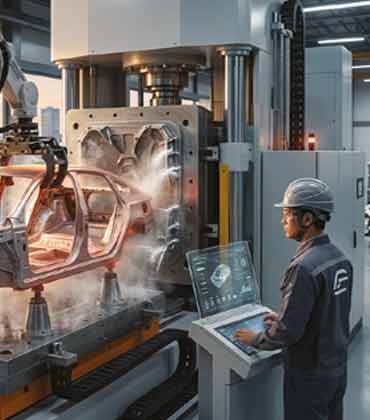
Innovative Die Casting Technologies Shaping APAC's Industrial Landscape
APAC die casting trends emphasize automation, process control, sustainability, smart manufacturing, and efficient production management.
EDITORIAL
Precision Behind Manufacturing Performance
A manufacturing process is defined by the precision of the details it manages. For complex materials and components, factors such as particle structure, surface protection and process cleanliness can influence how reliably a product performs throughout its lifecycle. This edition of Manufacturing Outlook APAC explores companies and leaders addressing those details through materials engineering, coating technology and process chemistry. Their work shows how precision at the manufacturing stage can improve consistency, reliability and performance.
Our cover story features TODA KOGYO [TYO:4100], recognized as the Top Industrial Catalysts Manufacturer in APAC 2026. Its expertise in wet synthesis gives the company control over the size, shape, distribution and surface characteristics of iron-oxide particles before they enter an industrial process. That capability supports its TIC combustion catalyst while also informing the development of high activity iron catalysts for emerging hydrogen and carbon-material applications.
Also recognized is DAWN Tech, recognized as the Parylene Coating Solution of the Year in Asia 2026. Its regional coating operations combine application-specific engineering with standardized processes, helping manufacturers protect intricate components against moisture, chemicals, corrosion and electrical stress. Its approach considers geometry, materials and operating conditions before selecting the coating and deposition process.
The issue also features perspectives from manufacturing specialists. Jon Urquhart, Director of Global Applications Engineering at PVA, explains why conformal coating materials and application methods need to be evaluated against the requirements of each product rather than treated as one-size-fits-all choices. Uwe Wanner, Director of Research & Development and Laboratory Manager at MicroCare, examines how tailored cleaning chemistry can address specific contamination, material and process requirements while improving consistency and efficiency.
Together, these stories highlight how manufacturing performance is shaped by decisions made before production reaches its final stage. We invite our readers to explore these perspectives and discover how precise materials engineering, thoughtful process design and application-specific expertise are helping manufacturers build better products across APAC.
