

Shaping an Approach to Prototyping
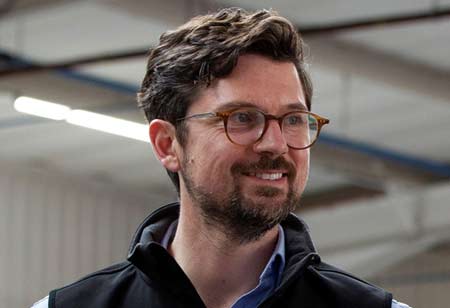
My background in 3D printing is hands-on. Instead of inheriting a shop full of industrial machines, I built the business one printer at a time. Each project—from helping a university lab print custom enclosures to designing holiday ornaments for local vendors—taught me how to balance ambition with reliability. That experience influences how I deliver rapid prototyping today. I insist on thorough consultations up front, where clients describe not just dimensions but the part’s function and environment. Material selection is a collaboration: I’ll suggest nylon or ABS for simple housings, carbon fibre reinforced PPS (PPS CF) when thermal resistance and stiffness are essential, or polypropylene when flexibility and chemical resistance matter. I’m transparent about the limits of FDM. Some customers are surprised when I recommend machining or casting instead; the goal is always to choose the right process, not to sell them on 3D printing.
Trends Reshaping Rapid Prototyping and Product Development
Additive manufacturing in 2026 is very different from when I started. Industry wide trends are forcing all of us to adapt. Materials science leads the charge. High performance thermoplastics such as PEEK, PEKK and carbon fibre composites are moving beyond prototypes into production end use parts. Print speeds have climbed dramatically thanks to CoreXY motion systems and lightweight extruders that deliver 600 mm/s or more. Multi material and multi color systems are now mainstream, letting us print elastic hinges and rigid bodies in one pass. Sustainability has become non negotiable; recycled filaments and closed loop material systems are appearing in industrial settings. These shifts coincide with a broader move from prototyping to production tooling, and clients are asking us to print jigs, fixtures, and small batches of end use components rather than single prototypes. AI powered slicers, predictive maintenance and digital twins allow us to simulate builds, optimize tool paths and monitor machines remotely. The most successful service bureaus I know embrace these technologies while maintaining the artisan’s sensitivity to detail.
Balancing Speed, Accuracy and CostEvery customer wants parts “yesterday,” perfect to the micron and inexpensive. Balancing those demands begins with clear expectations. When speed is the priority, I rely on proven workhorse materials like PLA+ on high speed printers and focus on geometry over surface finish. For tight tolerances or thin walled parts, we slow down and may pivot to SLA or MJF printing. Cost efficiency comes from smart workflow: keeping frequently used printers in house and outsourcing only when necessary. Adopting lean manufacturing principles and digital twins helps reduce setup time and material waste, while AI assisted software can cut development costs and lead times by as much as 30–50 %. Often the most economical path is to invest in design; a well designed part prints faster and requires less post processing. I also encourage clients to prototype early and often. Multiple quick iterations are far less costly than a single complex run that fails.
-
Rapid prototyping isn’t just about machinery; it’s about perseverance, listening to customers, and being willing to iterate until you get it right.
Leadership and Customer Relationships
Working with large customers like Molex, First Service Residential, IFCO, and the University of Missouri Health Care has reinforced that 3D printing is as much about trust as it is about technology. Strong relationships demand clear communication and empathy. I learned early on that responding to emails promptly, delivering on time, and owning mistakes builds loyalty and leads to referrals. Collaboration with suppliers and customers often sparks innovation; one electronics client needed anti static fixtures, which led us to develop parts from ESD safe materials. Leadership also means investing in team development. I encourage my employees to experiment with new materials and processes and to learn from failure. Transparency—sharing successes and challenges openly with clients—fosters partnership rather than a transactional relationship.
Advice for Professionals Entering the Field
For those looking to build a career in rapid prototyping and advanced manufacturing, start small but think holistically. Learn the fundamentals—design for additive, material properties, printer maintenance—before chasing the latest hype. Be prepared to iterate not just your prints but your business model. The industry is shifting toward distributed manufacturing and on demand supply chains. Success will come to those who can integrate digital tools like AI, digital twins and predictive analytics with human centered design. Finally, never forget the human element. The most rewarding part of my job isn’t watching a printer hum; it’s seeing a client hold a prototype that solves their problem. That sense of wonder is why I still wake up excited to push this technology forward—for my family, for my community and for the limitless possibilities still waiting to be printed.