
Latin America is becoming increasingly established as an industrial and resource-based region, offering greater opportunities in responsible environmental management. With the increase of industrialization in sectors such as mining, manufacturing, energy production, agriculture, and infrastructure, there has been a notable increase in demand for effective environmental remediation chemicals.
Weekly Brief
Be first to read the latest tech news, Industry Leader's Insights, and CIO interviews of medium and large enterprises exclusively from The Manufacturing Outlook
Environmental Remediation Chemical Solution Manufacturers in Latin America
Environmental remediation chemical solution manufacturers produce treatment products used to address soil, water and contamination challenges. With a focus on chemical performance, application safety, site suitability and environmental compliance, they support cleaner restoration work and more responsible remediation outcomes.
Solutions

TEQUIA
Advancing Environmental Restoration through Chemical Innovation
Ivan Vega, CEO
Environmental remediation often depends on biological and mechanical processes that can take days or weeks to reduce contamination, and often involve extensive site intervention. These methods limit control over treatment outcomes and delay the stabilization of affected environments.
State of Industry
Deep Dive
Bringing Greater Precision to Environmental Remediation
Cleaning up industrial contamination remains a complex responsibility for organizations managing site restoration, regulatory compliance and operational costs. Conventional remediation methods often depend on biological degradation or mechanical removal, but their effectiveness can vary depending on the type and concentration of contaminants involved. They can also extend project timelines and introduce additional operational complexity. As a result, the focus is increasingly shifting toward remediation approaches that can transform contaminants in a more controlled and predictable way while meeting environmental requirements without unnecessarily disrupting ongoing operations.
Leadership Perspective
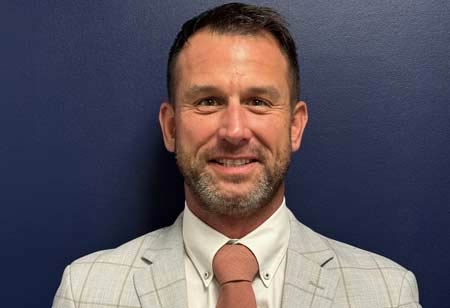
Ox Industries
Building a Culture of Safety in Manufacturing
Richard Foist, Environment, Health and Safety Manager
My 23 years in the military taught me strong leadership is built on trust, accountability and a clear vision. In the recycled paper mill, I apply these same principles by setting expectations, ensuring every team member understands their role and fostering open communication. I lead by example, consistently reinforcing safety protocols and adapting strategies based on feedback and data. This approach ensures a proactive safety culture, where every employee feels valued and empowered to contribute to a safer workplace.
Environmental Remediation Chemical Solution Manufacturers in Latin America News
Latin America's Cleanup Demand Pushes Chemical Remediation into Strategic Planning
Thursday, August 27, 2026
Environmental remediation chemical solution manufacturers in Latin America are gaining stronger relevance as industrial activity, mining legacy sites and urban redevelopment increase pressure for effective cleanup. The market is no longer defined only by emergency response after contamination is discovered. It is becoming part of long-term asset management, compliance planning and corporate sustainability strategy.
Latin America’s environmental remediation market is expected to reach USD 21.32 billion by 2033, with a projected CAGR of 7.3 percent from 2026 to 2033. Market growth is being driven by rising industrial activity, legacy contamination from mining and manufacturing and stronger enforcement of environmental regulations.
This creates a larger role for chemical solution manufacturers. Contaminated sites often require soil stabilizers, oxidants, reducing agents, adsorbents, surfactants and specialty formulations designed for specific pollutants. A remediation contractor may manage the field project, but chemical manufacturers influence whether treatment is technically effective and cost-efficient.
The challenge is that contamination profiles differ sharply across the region. Mining sites can have heavy metals and acidic drainage problems. Industrial sites can be affected by hydrocarbons and solvents. Agricultural land can suffer pesticide contamination and nutrient effects. One cannot use the same chemical for all kinds of sites.
It is necessary for manufacturers to position themselves as experts at applications rather than as mere suppliers of chemicals. The customer will require assistance in choosing the right formulation, determining the proper dosage and handling the delivery process. There could be problems while using any chemical if the soil profile and the contaminants were not known.
The LATAM soil remediation market was valued at USD 3.07 billion in 2025 and is projected to reach USD 6.04 billion by 2034, growing at a CAGR of 7.82 percent from 2026 to 2034. The forecast reflects increased attention to contaminated land, site reuse and environmental compliance across the region.
This demand is linked to brownfield redevelopment and infrastructure expansion. Developers, utilities and industrial companies need land that can be safely reused. Remediation chemicals can support faster treatment timelines when excavation or off-site disposal is too costly or disruptive.
Regulatory diversity remains a constraint. Latin America does not operate as a single environmental market. Brazil, Mexico, Chile, Colombia and Peru each have different permitting expectations, enforcement capacity and site-assessment practices. Manufacturers that understand local rules can help customers avoid delays and misaligned treatment plans.
The next step of the market will favor companies who integrate the knowledge of chemistry with field services. Not only do the customers require products but assurance that their products suit the contaminants, site requirements and reporting requirements.
Manufacturers of environmental remediation chemical solutions in Latin America have become cleanup strategy partners. The worth of their company is judged by how much they assist their industrial and public sector customers to transform their difficult contamination problems into remediation solutions.
Mining and Industrial Contamination Create Demand for Specialized Treatment Chemistry
Thursday, August 27, 2026
Environmental remediation chemical solution manufacturers in Latin America are being reshaped by the region’s heavy reliance on mining, manufacturing and resource extraction. These sectors support economic growth, but they also create environmental liabilities when metals, tailings, process chemicals or contaminated water affect nearby land and ecosystems.
Latin America and the Caribbean remain major suppliers of critical minerals, with significant shares of global resources in lithium, copper, silver and graphite. The region also has important reserves of molybdenum and tin, along with specialty minerals such as niobium and rhenium.
This resource base creates a long-term market for remediation chemistry. Mining-related contamination can involve metals, acidity, suspended solids and complex water-treatment challenges. Chemical manufacturers may supply neutralizing agents, precipitation chemicals, coagulants, flocculants, sorbents and stabilizing formulations that reduce contaminant mobility.
The risks are not theoretical. Brazil’s Federal Prosecutor’s Office sued Vale, the Brazilian government and the state of Pará over alleged heavy metal contamination affecting the Xikrin Indigenous people near the Onça-Puma nickel mining site. The lawsuit followed concerns about lead, mercury and nickel exposure, while Vale has denied responsibility and said it monitors water quality.
Cases like this show why remediation products must be supported by credible monitoring and transparent documentation. A chemical treatment program must do more than reduce concentrations in one sample. It must demonstrate that contaminants are being controlled under site-specific conditions and that public health or ecological risks are being addressed.
Industrial contamination adds another layer. Manufacturing plants, fuel terminals and legacy industrial corridors may require treatment for hydrocarbons, chlorinated solvents or mixed waste streams. In-situ chemical oxidation and reduction can be useful, but only when the contaminant, geology and groundwater chemistry are well understood.
Chemical suppliers are also adapting to broader sustainability expectations. Recent Latin America chemical market commentary notes that the region’s chemical sector is navigating fragmented regulations, trade shifts and changing customer expectations. It also highlights demand from industrial, utilities, mining and food processing customers for sustainable, performance-grade chemical solutions.
This means manufacturers must balance treatment strength with environmental impact. Aggressive chemistry may remove contaminants quickly, but clients increasingly ask about secondary impacts, worker safety, residual byproducts and compatibility with local disposal rules. The strongest suppliers will be those that can document both performance and responsible use.
Water treatment is becoming part of the same opportunity. Mining and industrial sites often need to manage contaminated groundwater, process water and runoff. Chemical remediation manufacturers that can serve both soil and water treatment will be better positioned for large industrial customers.
The next phase of demand will likely favor manufacturers with application engineering and local technical teams. Buyers need specialty chemicals, but they also need support through testing, pilot work and performance verification.
Environmental remediation chemical solution manufacturers in Latin America are becoming industrial risk-reduction partners. Their strongest value will come from helping resource and manufacturing companies address contamination while protecting operations, communities and regulatory standing.
PFAS and Emerging Contaminants Raise the Bar for Remediation Chemistry
Thursday, August 27, 2026
Environmental remediation chemical solution manufacturers in Latin America are facing a more complex opportunity as PFAS and other emerging contaminants enter the cleanup conversation. Traditional remediation chemistry remains important, but customers are beginning to ask whether treatment methods can address persistent pollutants that do not respond easily to conventional approaches.
PFAS remediation is one of the most technically difficult areas because many compounds resist natural breakdown. A recent review of PFAS mitigation in wastewater found that adsorption with activated carbon or ion exchange resins and membrane processes such as nanofiltration or reverse osmosis can show strong removal potential. Even then, these methods can face challenges from energy demand, fouling, short-chain PFAS performance and concentrated waste streams.
This distinction matters for manufacturers. Removal does not necessarily mean destruction. The adsorbents and ion exchange materials do adsorb the contaminants, but their disposal is necessary after that. Technologies that are supposed to break the chemical bonds have been costly or immature in some way.
In a 2026 study of PFAS remediation technologies, the author reviewed conventional and novel materials like activated carbon, ion exchange resins, engineered biochars, carbon nanotubes and designer polymers.
For Latin America, PFAS may not yet dominate every remediation budget, but the direction is clear. Multinational manufacturers, airports, water companies and industries will come under increased scrutiny as awareness rises internationally. Chemical companies providing solutions can ensure that they are offering services in PFAS testing, media selection and waste management.
However, the response to emerging contaminants depends on the cost. Technologically superior treatment options may be quite viable but hard to implement regionally. The manufacturer should design the treatment option according to the budget constraints.
Research and reporting continue to highlight innovation. The Guardian reported that Rice University researchers developed a layered double hydroxide material that can remove some PFAS faster than current methods and break down PFAS-bound material through heating, while noting that regulatory and operational hurdles remain before wide deployment.
Laboratory successes do not necessarily translate to commercial success stories. There are processes such as treatability studies, safety evaluations, waste management plans, among others, that have to be in place for field application. It is important for manufacturers not to make promotional claims that outrun validation processes.
The environmental remediation requirements of Latin America are also linked to traditional contaminants. Traditional cleanup requirements in terms of soil, water and industrial contamination are still pertinent despite growing concerns over PFAS. The global contaminants remediation market size is projected to reach USD 154.86 billion in 2026 and is expected to grow further to USD 312.1 billion in 2035.
The next phase of emerging-contaminant remediation will likely favor manufacturers that combine proven products with careful innovation. Buyers need innovative products, but more importantly, buyers require credible results.
Latin American environmental remediation chemical solution manufacturers are poised to become emerging-contaminants readiness partners. The success of such manufacturers will depend on their ability to assist clients in managing persistent contaminants through credible chemistry.
Environmental Remediation Chemical Solution Manufacturers in Latin America Info
Q1
What Do Top Environmental Remediation Chemical Solutions Manufacturers Do?
Top Environmental Remediation Chemical Solutions Manufacturers develop chemical products that help remove, neutralize, or contain environmental contaminants in soil, groundwater, surface water, industrial facilities, and other affected sites. Their solutions support pollution control, site restoration, industrial cleanup, and regulatory compliance across industries such as mining, manufacturing, energy, agriculture, and infrastructure.
Q2
What Types of Solutions Do Environmental Remediation Chemical Manufacturers Provide?
The products offered by Top Environmental Remediation Chemical Solutions Manufacturers may include oxidizing and reducing agents, absorbents, dispersants, stabilization chemicals, wastewater treatment formulations, and specialty remediation compounds designed for specific contaminants. Many manufacturers also formulate chemicals that improve cleanup efficiency while supporting safer handling and reduced environmental impact under varying site conditions.
Q3
Why Is Demand Growing for Environmental Remediation Chemical Solutions?
Demand for Top Environmental Remediation Chemical Solutions Manufacturers continues to grow as governments, industries, and communities place greater emphasis on environmental protection, sustainable operations, and responsible land management. Aging industrial sites, stricter environmental regulations, increased redevelopment of contaminated land, and greater awareness of water quality and ecosystem health have all contributed to stronger demand for effective remediation technologies and specialized chemical solutions.
Q4
How Are Environmental Remediation Chemical Manufacturers Evaluated?
Organizations evaluating Top Environmental Remediation Chemical Solutions Manufacturers typically look at product performance, application flexibility, environmental compatibility, technical expertise, quality assurance and regulatory compliance. They also assess whether a manufacturer can address different contamination scenarios with reliable, science-based solutions that deliver consistent remediation results while supporting safe implementation across varied environmental conditions.
Q5
How Do Environmental Remediation Chemical Solutions Create Value?
Top Environmental Remediation Chemical Solutions Manufacturers help organizations reduce environmental liabilities, improve cleanup efficiency, shorten project timelines, and support compliance with environmental standards. Effective remediation chemicals can lower long-term site management costs, reduce operational risks, protect surrounding ecosystems, and enable contaminated properties to be safely restored for future industrial, commercial, or community use.
Q6
What Role Do Innovation and Technical Expertise Play in This Industry?
Innovation is a defining characteristic of Top Environmental Remediation Chemical Solutions Manufacturers. Ongoing research focuses on improving chemical effectiveness, reducing secondary environmental impacts, enhancing compatibility with biological and physical remediation methods, and developing formulations for increasingly complex contaminants. Technical expertise also enables manufacturers to adapt solutions to diverse site conditions, helping environmental professionals achieve more reliable and sustainable remediation results.
