



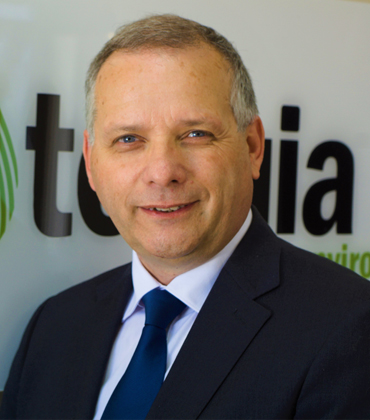
 Ivan Vega, CEO
TEQUIA takes a different approach, using a catalytic chemical remediation method based on the chemistry of binding to contaminants and acting directly at the molecular level. Its formulations break the structural bonds of these compounds, transforming harmful substances into non-contaminant forms within minutes to hours.
When organic pollutants are present in soil or water, these formulations interact directly with their composition, replacing slower biological pathways with a more precise and controllable process. This enables faster, controlled, in-situ restoration of contaminated soil and water without excavation or material transfer.
In cases involving heavy metals, the strategy shifts from extraction to charge neutralization, rendering them inert and non-bioavailable.
The combination of speed, precision and control allows TEQUIA to advance its mission of converting waste into biologically useful resources while improving environmental safety. The result is not just removal, but transformation.
“Our process replaces biological methods with a controlled chemical approach, enabling faster and more precise remediation,” says Ivan Vega, CEO.
At the core of TEQUIA’s technology is its TCAS technology, a catalytic remediation platform designed to accelerate the degradation of organic contaminants through chemical action. The process mineralizes it, converting organic matter into bioavailable ions. This transformation allows previously contaminated material to re-enter natural cycles, effectively turning waste into a resource that can stimulate biological activity and support regeneration.
-
Our process replaces biological methods with a controlled chemical approach, enabling faster and more precise remediation.
The scientific design behind this system draws from principles typically observed in nature. Within the platform, TCAS CATA technology simulates enzymatic behavior through synthetic chemistry, creating an “electrical pathway” that enables rapid electron flow. This reduces energy barriers within chemical reactions and initiates chain reactions that efficiently break molecular bonds. The outcome is a controlled, high-speed process that draws on enzymatic principles while accelerating degradation.
Engineering plays a critical role in ensuring these reactions remain stable and effective under real-world conditions. TEQUIA applies transient-state thermodynamics to guide formulation design, focusing on reorganizing ionic structures instead of applying force-intensive chemical treatments. This approach allows reactions to occur under ambient conditions while supporting controlled chemical performance.
Turning Contaminated Sites into Functional Environments
For organizations managing contaminated sites, the implications are practical and immediate. The approach enables faster treatment cycles, allows existing infrastructure to be utilized without major modifications, and reduces operational costs. In addition, the ability to convert waste into bioavailable outputs that support biological activity introduces a secondary benefit, aligning remediation efforts with broader efficiency and sustainability goals.
The effectiveness of this approach is reflected in real-world applications. In one case, TEQUIA treated contaminated forest soil, enabling native seed germination within a month. In another, the company addressed a large-scale landfill fire in Patagonia, treating approximately 720,000 cubic meters of waste. The fire was extinguished, and no recurrence was observed over a three-year period, demonstrating both immediate impact and long-term stability.
These outcomes have led organizations, including the Government of Chile, the Government of France, CONAF, Codelco, and national firefighting bodies, to engage TEQUIA in complex remediation efforts. Across these engagements, its work continues to center on a single principle of addressing environmental challenges at their source, where chemistry provides the most direct path to transformation.
Advancing its scientific approach, TEQUIA is extending its focus toward phase-transition technologies, with the goal of achieving carbon-neutral remediation processes. This direction reinforces the company’s broader objective of transforming waste into biological resources while maintaining environmental safety and operational efficiency.
